essay
The Six Techniques of Mind Transfer
View full artwork →
An idea can be clear in conversation and unrecognisable in the thing built from it. Between intention and implementation, something has been lost.
The first Dawson Ledger made this tangible. Conversations with AI produced prose, code, diagrams and images, including possibilities I had not considered. I tried the results, asked for changes and decided what belonged.
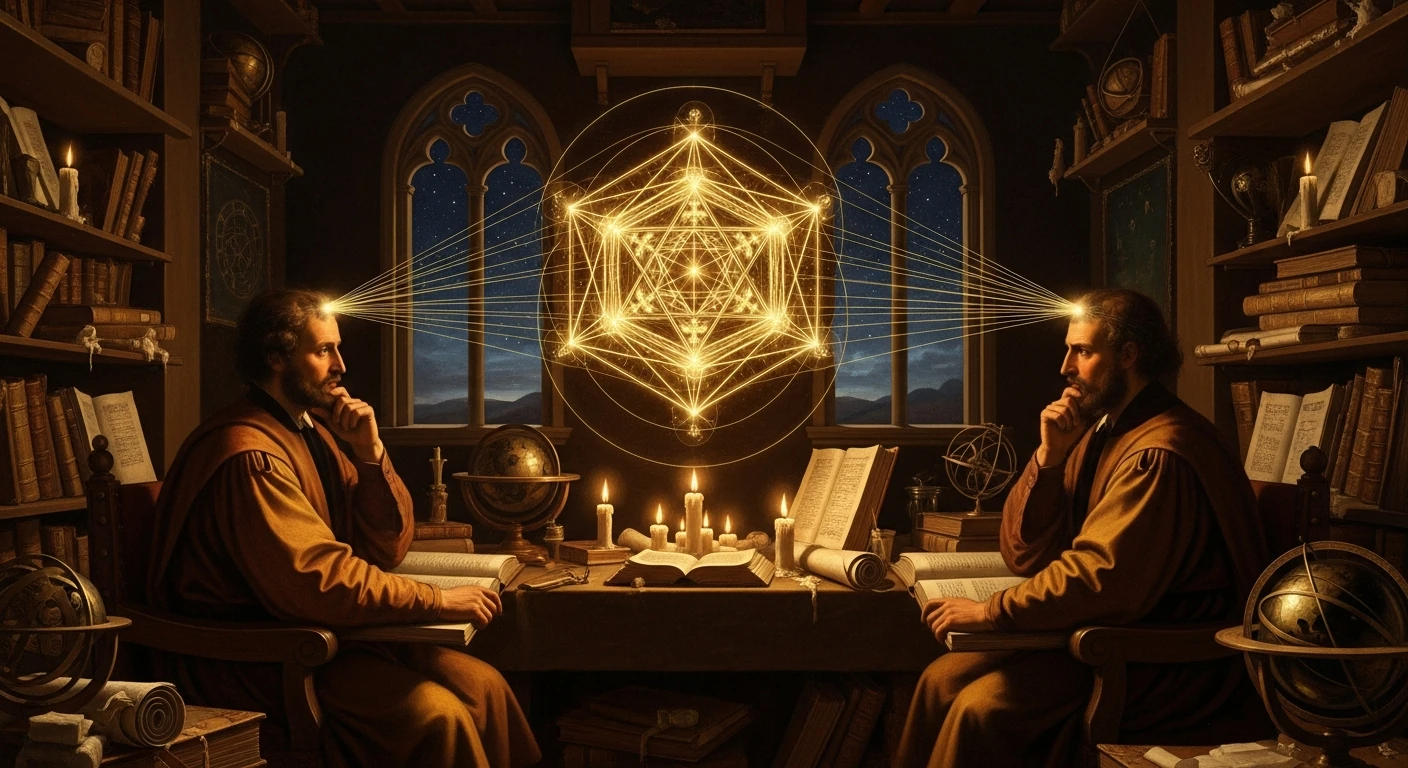
“Mind transfer” was my name for carrying the purpose into the next conversation. Yesterday’s explanation was not always available when today’s task needed it. These six techniques helped me make the context and reasons explicit enough to continue the work.
Technique 1: Philosophy as Operating System
Start by saying what the work is for.
The original Ledger began with convictions about truth, beauty, stewardship and serving God. Writing them down gave decisions a common point of reference.
For a family essay, a useful brief might say: preserve the recorded facts, keep uncertainty visible, and let the person’s life matter beyond the lesson I draw from it. That brief helps AI develop the telling while I keep the person, the evidence and the purpose of the piece in view.
A philosophy becomes useful when it gives the next decision a reason.
Technique 2: Sacred Numbers as Design Tokens
A design token is a named value reused across a design: a colour, a spacing interval or a transition’s duration.
In the 2025 Ledger, values such as 618 milliseconds and proportions associated with the golden ratio expressed a personal design language. I wanted order to appear in rhythm, spacing and movement. Those values were symbolic starting points for a design I could try and refine.
For an illustration opening from a small preview, I can ask AI to use one shared duration, then try the result. Adjusting that shared value lets me explore different rhythms while keeping the experience consistent. The symbolic starting point remains open to what feels comfortable in use.
Technique 3: Archetypes as Mental Models
A mental model is a way of directing attention towards particular questions. The first Ledger used three archetypes: Sage, asking what is true; Architect, asking how to build; and Magician, asking what could be created.
Consider a visual essay about a musical pattern. The Sage asks what the mathematics describes. The Architect asks how to make the explanation legible. The Magician asks what an image or experiment might let someone notice. I can ask AI for possibilities from each position, then judge how they belong together.
Together, the three perspectives help me move from an interesting thought towards an explanation, a usable form and a new possibility. Each contributes a different question.
Technique 4: Metaphor as Memory
The original roadmap had cathedral names: Cornerstone, Nave, Clerestory, Flying Buttresses and Spire. The Pattern Graph and Resonance Engine extended that language into connections between essays. These names belong to the earlier architecture; they reveal my wish for something coherent, inhabitable and worth returning to.
For a new project, “workshop” suggests room to try, inspect and revise. Pair it with a plain instruction: show one finished example, explain how it was made, and give the reader a useful next step. AI can develop alternatives from that brief.
The metaphor carries a recognisable working language; the plain instruction gives it a practical expression. Together they help an idea remain recognisable as it moves between conversations.
Technique 5: Persona Reviews for Quality
I once invoked Hiram Abif as a review persona to bring the standards of a master builder to mind. A persona gives a review a direction; it does not supply independent expertise.
A concrete request might be: read this art page as a careful editor; find any sentence that confuses the historical subject with the AI-generated scene. Ask for the passage and a reason, then compare the finding with the image, its credit and its source.
The imaginative framing can remain. Its standards should be clear enough to examine, and its findings checked against the work.
Technique 6: Frameworks as Reasoning Engines
A framework is an organised set of ideas for examining a subject. The original Ledger brought theological, philosophical and scientific frameworks into conversation so that a question could be examined from more than one direction.
Take stewardship. In an investing essay, it prompts a question: what would someone entrusted with another person’s savings have to explain about this decision? AI can help develop competing answers, surface assumptions and suggest evidence to seek. The answers must then be checked against the circumstances.
This is how I want connections to work: revealing a mechanism, a tension or a limit, while leaving room for the example to challenge the framework.
Carry the purpose forward
The useful continuity is a practice: state the purpose, make an attempt, inspect it, and preserve the reasons for the next decision. Keep the source and explain what changed. Let AI contribute alternatives, then develop the ones that give the purpose its clearest expression.
What travels between sessions is an account of the work. Make it clear enough for another mind—including my future self—to question and continue.