Patterns of Civilization
Follow water into cities, ideas across languages, and the things people carry through times of change. These illustrated essays bring places and periods into conversation, while keeping their differences in view.

Listen to The Lamp Index, see the artwork for Patterns of Civilization, or explore visual studies and experiments with code. Alongside them are collections of writing on history, investing and the unexplained.
Choose something to read, hear or explore.

Follow water into cities, ideas across languages, and the things people carry through times of change. These illustrated essays bring places and periods into conversation, while keeping their differences in view.

An unusual report can be compelling without yielding a certain explanation. Here I follow witness accounts, documents and recordings, asking what each can tell us—and where the questions remain open.
Investing brings together many of my interests: how businesses work, how people decide, and how a good explanation can fail when it meets the world. These essays explore the thinking behind the numbers.
Five still images exploring mathematical pattern, proportion and symbolism.

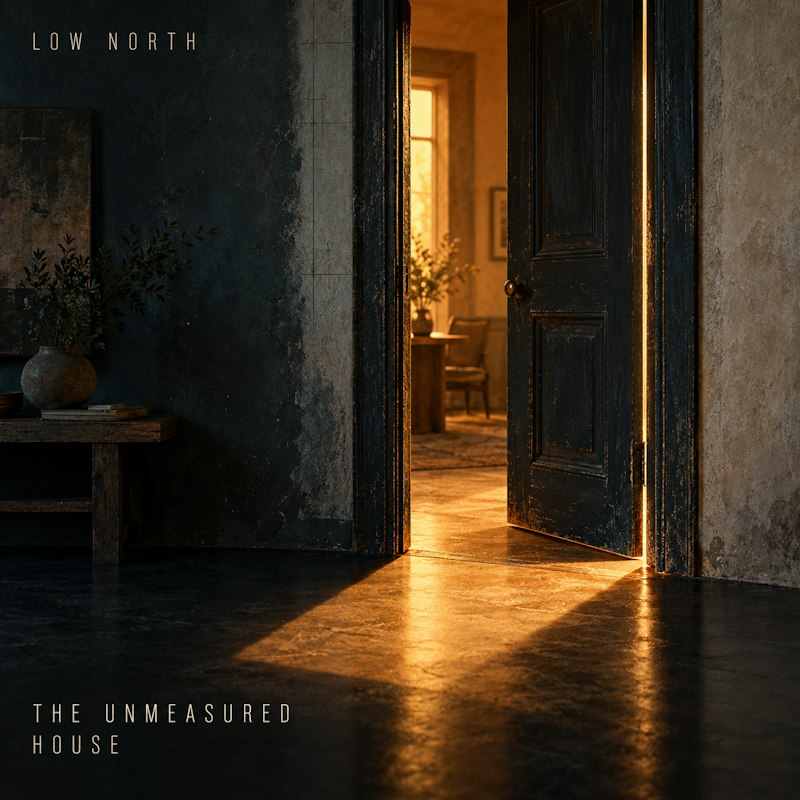
The Unmeasured House, a new seven-track release. Explore the album and return to The Lamp Index.
Project notes on making with code and AI, from a first idea to something you can try.
Drawing a mathematical relationship makes it possible to look at an idea as well as read about it. These five studies connect my interest in pattern and proportion with art and code; each explains the form and the thinking behind it.

Follow colour through a painting, then change the timing of two motions to draw a new shape.
Generative illustrations from the original Ledger’s art generators. Each study explains the mathematics or symbolism behind its image.
Building is also how I learn. I use AI to develop an idea into writing, images or code, try it, and revise it through use. These project notes explain what worked and what I would change.
Make convictions explicit enough to guide a real choice. A shared purpose reduces repeated deliberation while leaving room for judgement and discovery.
Use principles, examples, symbolic language and concrete review questions to carry context. Preserve the reasons as well as the result.
Let writing, images and code enrich one another around a particular vision, while accounting for the time, checking and care they require.
Bring truth, faith and stewardship into ordinary acts of revision and care. The spiritual responsibility remains with the person undertaking the work.
Bring the argument back to an inspectable example: an idea becomes mathematics, an image and code. Let the work transmit understanding as well as offer a finished experience.

How can a personal conviction become work that is coherent, useful and worth passing on? Philosophy as Operating System opens the question; the next four essays follow its consequences through making with AI.