
case notes
Belgian triangles: a wave, a scramble and a photograph
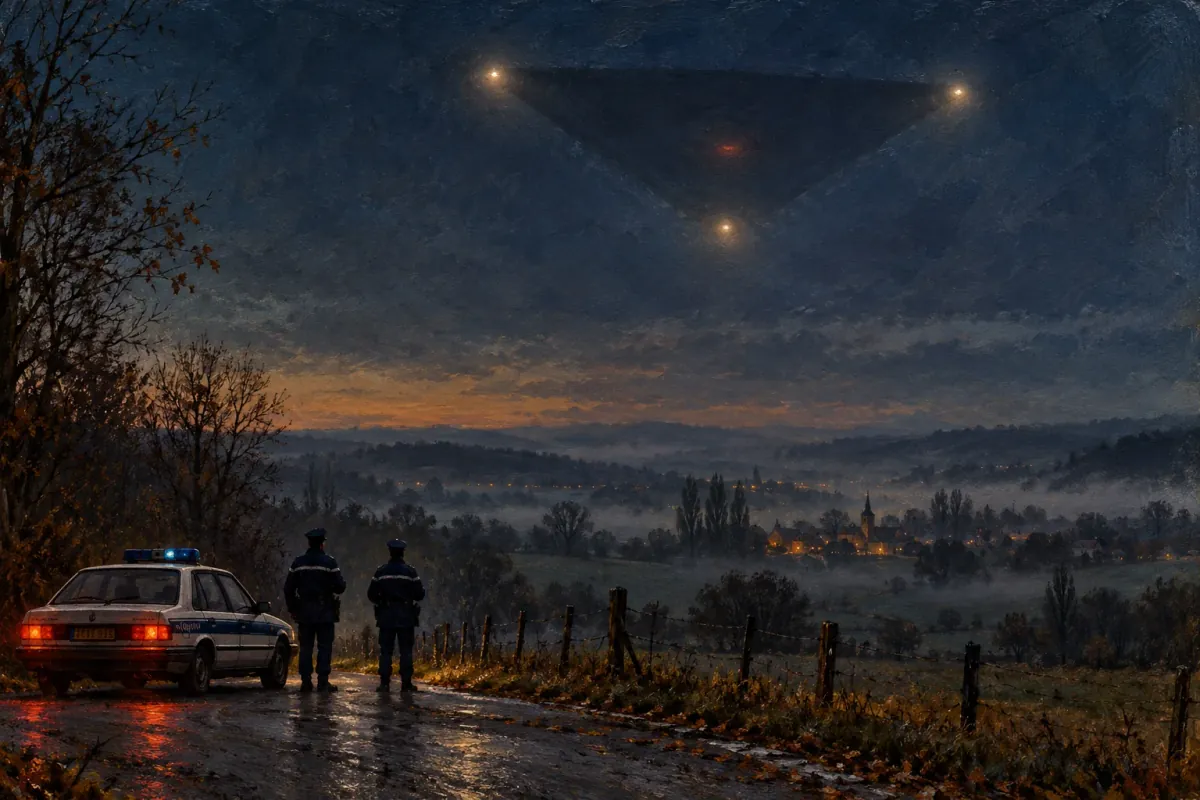
View full artwork →
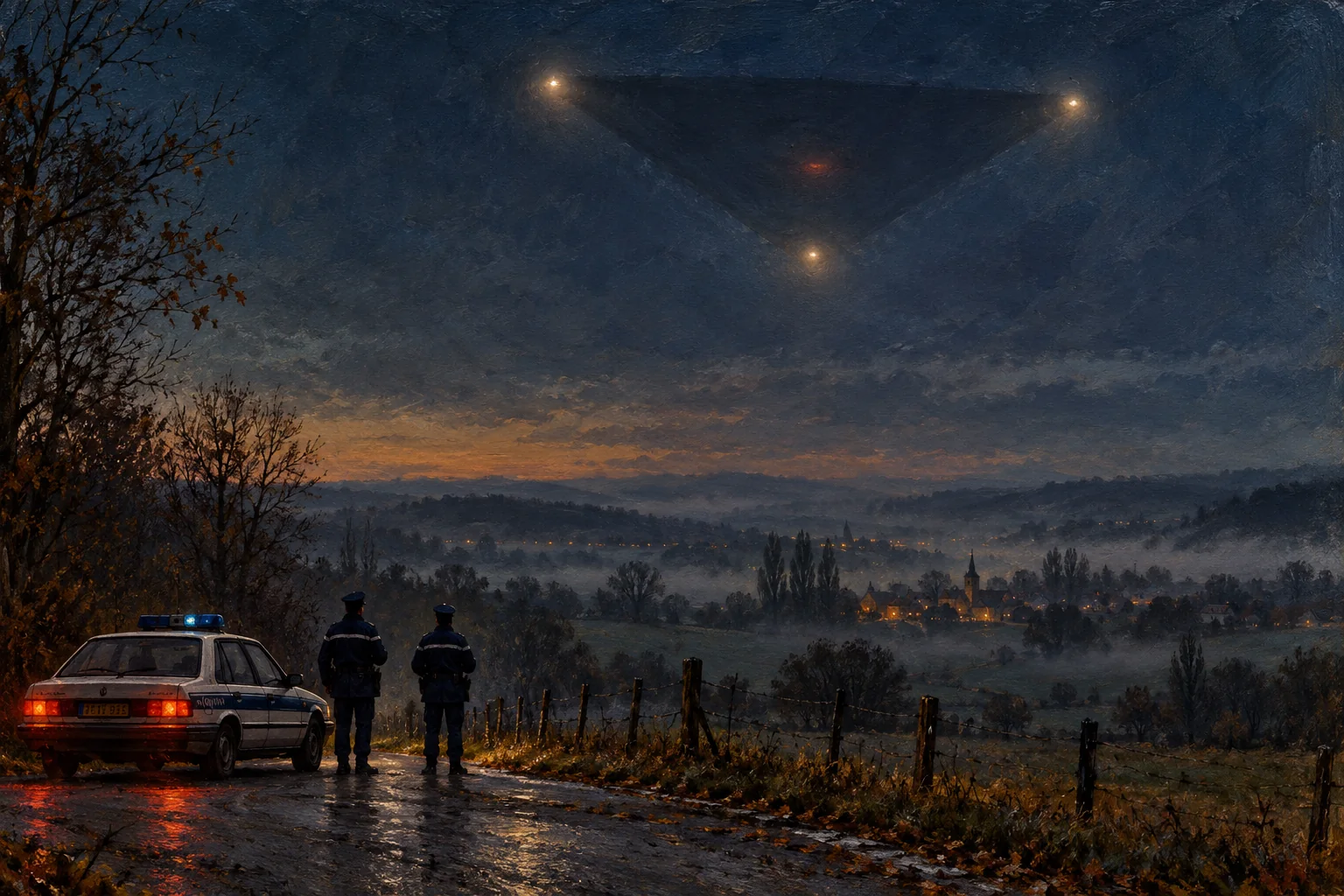
Three lights can suggest a shape before anyone knows whether there is a solid object between them. During Belgium’s 1989–90 reporting wave, the shape that took hold was a triangle: broad, low and unfamiliar. Reports reached police and military channels. On one much-discussed night, two F-16s went up to investigate. The pilots returned without visually identifying an unknown craft.
Follow the case: the scramble night · the photograph · the competing readings.
The night the fighters went up
The operational report for 30–31 March 1990 begins with reports from the ground. Three unusual lights were reported near Ramillies; the control centre at Glons asked the gendarmerie to check. Further reports and radar contacts followed, and two F-16s were scrambled from Beauvechain. The account then becomes a sequence of attempted interceptions and brief radar contacts. Crucially, it records no pilot visual identification of the phenomenon.1
The report gives the night a chronology, but it does not turn every ground light and every instrument contact into the same object. A reader can follow the escalation from an observation to an operational response without treating the response itself as proof of an extraordinary craft.
The wider wave began in late November 1989 and continued into the spring. Those civilian reports and this particular scramble are related parts of the story, separated by dates, observers and the kind of evidence they leave behind.2 That separation keeps the case from becoming more conclusive each time its pieces are retold together.
The photograph that left the case
For years, a dramatic image associated with Petit-Rechain supplied the wave with a seemingly definite object: a dark triangle and bright lights. In 2011, the photographer said he had made it with a model and lamps. A contemporary account by investigators who had tested ways of reproducing the image describes the admission and their earlier experiments.3
The photograph therefore cannot serve as independent confirmation of the reported craft. Removing it does not erase the police calls or the Air Force response. It changes what a reader should picture when hearing those accounts. The illustration on this page is imaginative art, not a replacement piece of photographic evidence.
What the radar locks can settle
A radar lock sounds like an answer. Here it is the beginning of another question: what did the radar acquire, and did it remain on that target? Skeptical readings have proposed interference, track-handling effects and contacts involving the other fighter. Those explanations need to be assessed against the instrument record; a striking speed figure copied from a summary is not enough.2
The same discipline applies to the ground reports. Aircraft, unusual viewing conditions and the influence of publicity are possible explanations for particular accounts. None becomes a complete account of every night merely by being plausible. Equally, an account that remains unidentified does not establish the existence of a large triangular aircraft.
Read the English operational-report transcription beside the account of the photograph’s withdrawal. They answer different questions. Then compare Washington’s two weekends or Lakenheath’s disputed sequence. Return to all cases.
Footnotes
-
Belgian Air Force, Major Lambrechts, “Report concerning the observation of UFOs in the night from March 30 to March 31, 1990”. Public English transcription mirrored from the circulating report; it is not an original signed scan. An operational chronology, not an identification of an unknown craft. ↩
-
Brian Dunning, “The Belgian UFO Wave,” Skeptoid episode 538, 4 April 2017. A skeptical secondary interpretation of the reports, radar episode and photograph, distinguished from the operational report above. ↩ ↩2
-
Wim Van Utrecht, “Triangles over Belgium — Addendum”, updated in 2011. An investigator’s account of photographic replication work and the photographer’s admission; it concerns the image, not every sighting in the wave. ↩