essay
The Unmaking of Men: A Biblical Pattern and Its Modern Rhymes
View full artwork →
A culture that wants reliable men has to teach them useful work, entrust them with responsibility and honour promises kept. A young man needs to see what he could become, and have somewhere to begin.
My concern is the gap between that expectation and the opportunities we offer. A school can praise practical competence while leaving little time to make or repair. A church can mourn absent men while offering a newcomer no task worth returning for. Men can answer those failures by withdrawing into distraction or grievance, making themselves less available to the people who still need them.
The responsibility runs both ways: institutions must give men a meaningful part to play, and men must be willing to take it. I turn to Scripture because it also shows how rulers can weaken a people by suppressing its men—targeting their sons, controlling their tools and reshaping their loyalties.
The pattern in the old stories
I follow five concerns through these passages: birth, body, tools, identity and assembly. These name things a community needs to protect—its children, its members’ dignity, its skills, its commitments and its places of belonging. The biblical passages approach them through very different circumstances.
In Exodus 1, Pharaoh orders Hebrew boys killed, trying to control a people’s future by attacking its children. The midwives’ refusal to kill them shows a different use of responsibility: those entrusted with vulnerable lives defend them. The question of continuity begins with people willing to protect the next generation.
1 Samuel 13 describes a people made dependent through the loss of a skill. The Philistines prevent Israel from having smiths—metalworkers able to make weapons—and Israelites must go to them even to sharpen farm tools. In Daniel 1, the pressure falls on identity: young men from Judah serving at a foreign court receive new names and training. Daniel keeps a religious commitment by refusing food he believes would defile him. One passage concerns control over practical means; the other, fidelity under pressure.
The passages on body and belonging complicate the pattern. Deuteronomy 23 excludes men with genital injuries from Israel’s religious assembly. Isaiah 56 promises faithful eunuchs—castrated men—an enduring name, better than sons and daughters. Here the question reaches beyond foreign oppression into a community’s own boundaries. Bodily injury or the inability to have children need not put a man beyond belonging.
The thread I draw from these stories is the suppression of men’s capacity to protect, provide, act together and carry a people’s identity forward. The passages show coercion and exclusion, but also resistance and restored belonging. That is the warning I bring to the present: weakening men’s capacity to act can weaken the wider community. Restoring responsibility means confronting the pressures that suppress it as well as asking men to step forward.
A quieter unmaking
I think our own society repeats a quieter version of this pattern. A man can be valued as a worker and consumer while having little room to exercise judgement, teach a craft or sustain a household and community. We ask for initiative while rewarding compliance; for self-command while continually selling distraction. A culture can suppress the habits it later blames men for lacking.
C. S. Lewis names a related contradiction in the first chapter of The Abolition of Man: “men without chests”. The chest is his image for trained moral feeling—the courage, loyalty and care that help us act on what we know to be right. He argues that education can undermine the very qualities society then demands. His concern is human formation broadly; I see a particular warning for how we prepare boys for the responsibilities of men.
Alexis de Tocqueville imagined another route in Democracy in America, volume II, part IV, chapter VI: a protective power keeping citizens comfortable but dependent by taking more of their decisions into its own hands. His warning concerns civic freedom. It makes me ask whether our institutions prepare men to exercise responsibility or settle for keeping them manageable. These pressures can grow through ordinary incentives and habits, without anyone directing a campaign against men.
Consider a newcomer to a church or lodge. He is told his presence matters, then spends each meeting watching established members do everything. Giving him a specific task, someone to learn from and a reason to return would make that welcome substantial. Reproach alone cannot teach him how to contribute.
Men also have choices to make. Recognising an institutional failure does not finish the repair, teach the child or visit the friend. A man can be right about what is wrong and still owe someone an evening of useful attention. Withdrawal becomes a habit through repeated decisions; showing up can become one too.
For a Christian, Mark 10 gives leadership its direction: Jesus contrasts rulers who lord power over others with greatness expressed through service. Provision, protection and teaching are ways to carry a share of the work. Women are partners in that work, with judgement and agency of their own. Men who need support through illness or grief belong within it too.
Put the argument to work
Begin with a few commitments another person can recognise.
Make yourself available. Care for the body and attention you bring to your obligations. Protect rest and practise strength within your circumstances. Put limits on the feed that consumes an evening intended for your household. Keep the promise to be present, and face the person affected when you cannot.
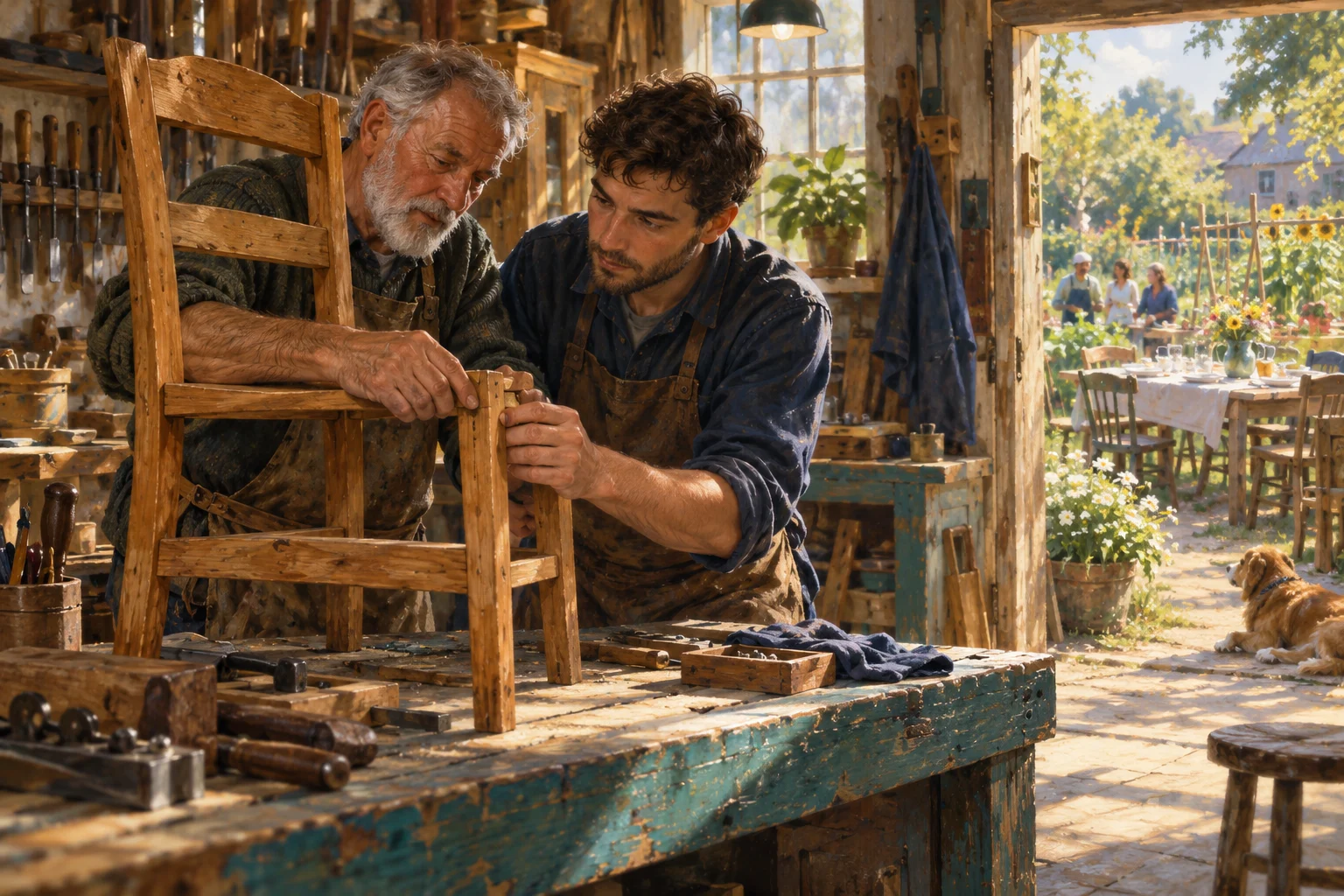
Learn and pass on a craft. Choose a useful result: a repaired hinge, a meal made well, a garden bed, code someone else can use. Ask for instruction and stay long enough to correct your mistakes. Then make room for a beginner. Teaching a skill passes on patience and responsibility along with technique.
Build a circle that serves. Gather two or three men regularly around a meal, a project or a service commitment. Give one another room to speak honestly and be challenged. Take on work outside the circle so that brotherhood benefits more than its own members. If someone disappears, notice and reach out.
The test is ordinary: was the promise kept, did the work help, did somebody learn, and were the people around us better cared for? Those answers tell us more than a performance of strength.
This is the reversal I want to encourage: institutions making room for useful responsibility, and men becoming willing and able to carry it. Set the table. Put a project within reach. Keep the next promise. Then invite one more man.
Related reading: The Fellowcraft: Skill and Creativity explores disciplined skill and the community around it.