essay
Technology as Liturgy
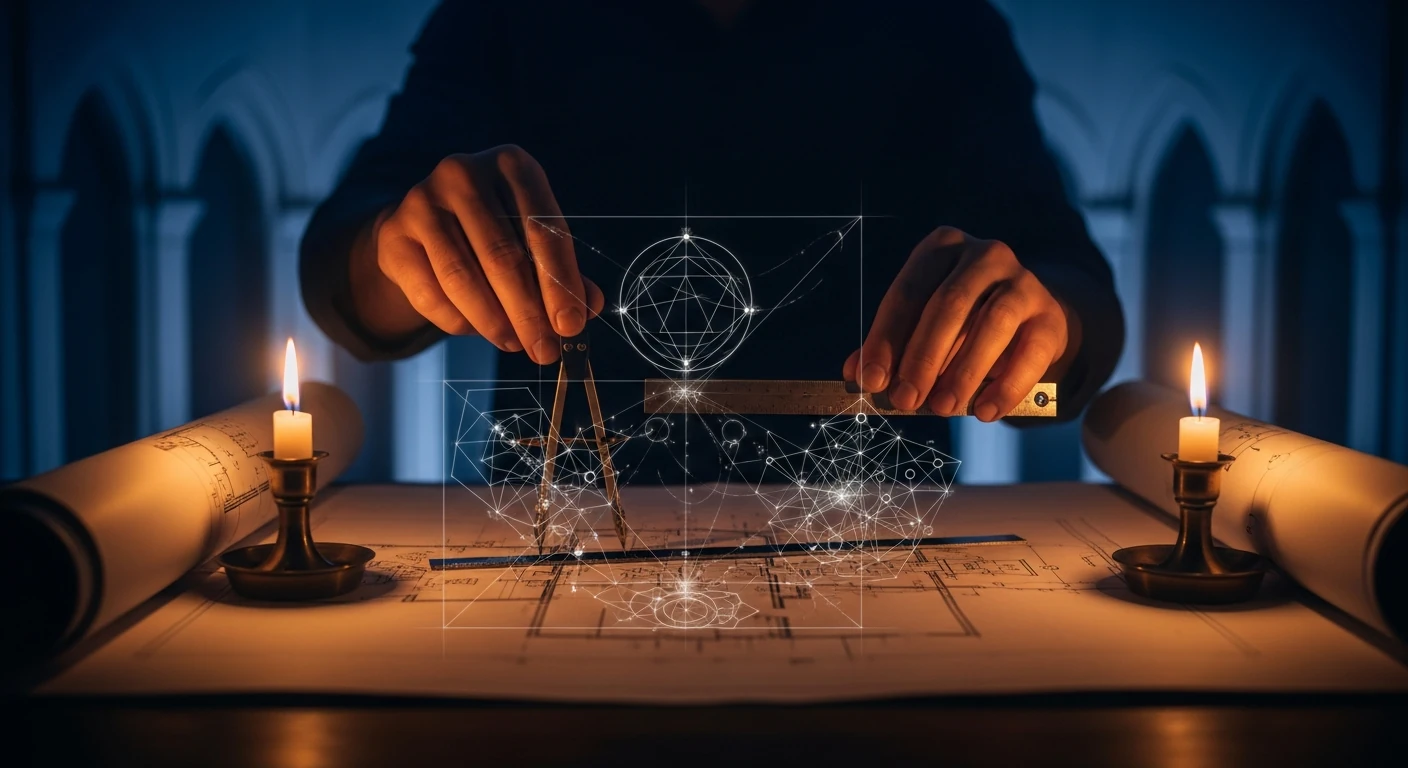
View full artwork →
The Dawson Ledger began as a creative project, but the making was never separate from what I believed. I wanted a place for ideas, art, code and family memory. I wanted the care given to that place to serve God.
That intention gives ordinary decisions a larger meaning: finding the words that carry an idea faithfully, giving an image room to be seen, and leaving enough understanding for someone else to continue the work. Care becomes a way of offering what I can make.
I call this technology as liturgy because repeated work gives conviction a practised form. Our habits of making teach us what to love, protect and neglect.
Stewardship over sovereignty
The first principle is stewardship: I hold the work in trust.
In November 2025, I used the Ledger’s Pattern Graph and journey framework as examples of building for successors. I wanted new connections and reading paths to be possible without reconstructing the site. That aim continues in reusable components, explained relationships and reading paths that another person can extend.
A family story makes that care personal. Preserving a record, listening to a remembered account and finding a form for the telling can give someone a place in the memory of those who follow. AI can help with structure and language; the story remains grounded in its sources, with uncertainty and family privacy respected.
Code asks for related care: names that explain a purpose, a record of why a surprising decision was made, and established tools where they serve well. The next maintainer may be me, after the original conversation has faded from memory.
An inheritance should carry understanding with it.
Truth as architecture
VERITAS ARCHITECTURA EST—truth is architecture.
This is a realist claim: truth exists independently of our descriptions, so our ideas must answer to it. I believe reality has an order we can discover. Giving an argument a beautiful form does not make it true; giving its claims and relationships a clear form makes them easier to examine.
An essay may connect music with mathematics, or an institutional habit with theology. The reader deserves to know whether the relationship is demonstrated, historically documented, or offered as a comparison or interpretation.
Imagine an illustration of a musical interval. Its colour and proportion may help someone notice a relationship. The explanation must identify what is represented. Bringing the AI-generated image and the words into agreement is part of telling the truth.
The first Ledger gave that ambition form in its connected essays and visual studies. I want the reader to follow the reasoning and experience the pleasure of seeing something come together.
Cathedral time
The cathedral gave the first Ledger an image of patient work. Its roadmap moved from Cornerstone towards Spire, expressing my wish for something whose value would extend beyond the excitement of making it.
A work grows through attention given over time. An essay gains a connection; a visual study gives an abstract thought a form; a family account finds its place beside an older record. Preserving those pieces and explaining their making gives future readers something they can enter and continue.
Revision belongs to this patience. An earlier essay records a stage of thought; a later reading can develop it, follow another connection or make its meaning more accessible. Keeping both lets the work carry the history of its making.
Cathedral time asks me to think beyond the immediate result—and to finish something another person can use today.
AI in the work of making
AI changed what I could attempt. I brought questions, convictions, references and personal material into conversations; models returned prose, code, images and possibilities. The exchange gave me forms to respond to and possibilities to develop. Making could become a way of discovering what I wanted to say.
That contribution belongs in the account of how the work was made. The reader should understand what AI supplied and what I directed, selected or changed.
In the original essay I called AI a sacred tool. I meant that work can be offered to God through the purpose and care of the person undertaking it. The spiritual purpose belongs to the person using the tool. It takes practical form in reading the passage carefully, trying the code and attending to what an image communicates.
The spiritual responsibility remains mine. So does the pleasure of discovering something through the work that I could not have fully specified at the beginning.
The craftsman’s prayer
The prayer in the original essay still gathers those intentions:
Let the architecture embody truth.
Let the documentation transmit understanding.
Let the code serve future maintainers.
Let the content integrate what should not be fragmented.
Let the whole serve God.
The Ledger’s software, arrangement and examples will change. What I want to preserve is the effort to bring conviction and practice closer together: a willingness to make, examine what has been made, and care enough to begin again.