
Work / Civilization / Civilizations / Islamic

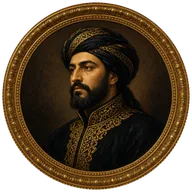

Islamic
Islamic civilization spans multiple basins and corridors, unified by religious-legal frameworks, shared scholarly networks, and trade routes.
The framework read
The author's reading of this civilization.
- Geography: multiple cores (Arabian Peninsula origins; later Nile, Tigris-Euphrates, Persian, and Indian Ocean littorals).
- Cultural-linguistic cohesion: Arabic as liturgical/administrative lingua franca; shared legal and scholarly traditions.
- Political-economy: caliphates and successor polities managing taxation and trade across Afro-Eurasian routes.
- Continuity: enduring civilizational identity across dynastic changes and regional adaptations.
Why it works — and how it breaks
- Success vector: S (religious-legal cohesion + scholarly networks) + G (rapid early expansion, route security).
- Failure modes: S fragmentation (regional dynasties, military autonomy) + fiscal strain; later G tech lag vs gunpowder/industrial rivals; major transmission to Latin West reshapes external competitors.
By the numbers †
- GDP2nd-3rd largest global economy, ~15-19% of world GDP, trade network integration
- Population2nd-3rd largest global population, ~16-18% of world population, moderate density 10-15/km²
- Urbanization10-17% urban population, largest city globally after Sinitic: Baghdad 800K-1.0M in 1000 CE, scholarly centers
- Fiscal Capacitytax revenue: $1.5B to $2.5B, tax-to-GDP ratio: 8% to 9%, military spending: 43% to 47% of tax revenue, fiscal-military relationship, regional variation
- Technology Index65→70, Golden Age peak, technology leadership, innovation rate 8-14 per century, high knowledge technology 18/20, technology diffusion to Latin West
- Institutional Metrics12-18 officials per 10K, 75% tax efficiency, 2,000 legal provisions, very high educational systems 25-30 per 100K, scholarly networks 100K-200K scholars
- Demographic Structure36-37% under 15, 32-38 years life expectancy, 5-6 fertility, 32-38 mortality, balanced structure, high youth proportion
- Infrastructure25,000-35,000 km roads, 5,000-8,000 km canals, 300 fortifications, 650 bridges, 500-800 caravanserais, 75/100 sophistication index, caravanserai network, trade route infrastructure, Style ax
† Scholarly estimates.
People over time
Population (millions) †
† Scholarly estimates, drawn as separately published segments.
Economy
† Estimates after Maddison, to 1945, log scale.
Polities as spans
Each bar opens its entry.
Turning points
- 622 CEIslamic Hijra
- 633 CE-651 CEMuslim
- 634 CE-638 CEMuslim
- 15-20 August 636Battle of the Yarmuk
- 750 CEAbbasid Revolution
- May-September 751 CEBattle of Talas
- 3-4 July 1187Battle of Hattin
- 3 September 1260Battle of Ain Jalut
- 7 October 1571Battle of Lepanto
- Siege 14 July-11 September 1683; battle 12 September 1683Siege and Battle of Vienna
People
- Al-Biruni973-1048
- Al-Farabi872-950
- Al-Ghazali1058-1111
- Al-Kindi801-873
- Averroes (Ibn Rushd)1126-1198
- Avicenna (Ibn Sina)980-1037
- Hunayn ibn Ishaq809-873
- Ibn Battuta1304-1368
Patterns and comparisons
Ideas that help read this civilization alongside others.
- Trade Networks as Civilizational Connectors and Transformers [trade-network-dynamics]Pattern · Trade routes (maritime, overland, riverine) transmit technologies, ideas, and pathogens, creating syncretic zo
- Technological Regime Change and Civilizational TransitionsPattern · Major technological shifts (agricultural, military, industrial, information) can reset civilizational advantag
- Educational Systems and Elite Formation Across CivilizationsComparison · Compares educational systems (Confucian examinations, Islamic madrasas, European universities, monastic school
- Legal Systems Across CivilizationsComparison · Compares legal systems (Roman, Islamic, Chinese, common law) to identify patterns in how law structures govern
- Islamic Scholarly Networks and Knowledge TransmissionPattern · Islamic civilization's scholarly networks (madrasas, scholarly travel, translation movements) enabled knowledg
- Succession Systems Across CivilizationsComparison · Compares succession systems (primogeniture, designated, elective, bureaucratic) across civilizations to identi
- Virtue Ethics and Character CultivationPattern · Virtue ethics (character cultivation, moral exemplars, virtue-based selection) shapes elite formation, legitim
Explore this civilization
Polities
- Abbasid Caliphate
- Ayyubid Dynasty
- Caliphate of Córdoba [caliphate-of-cordoba]
- Caliphate of Córdoba [cordoba-caliphate]
- Delhi Sultanate
- Fatimid Caliphate
- Ghaznavid Empire
- Mamluk Sultanate
- Mamluk Sultanate (Egypt)
- Ottoman Empire
- Rashidun Caliphate
- Samarkand
- Sammanid Empire
- Seljuk Empire
- Timurid Empire
- Umayyad Caliphate
- Umayyad Emirate of Córdoba
Data cards
- Islamic Civilization Demographic Structure 800-1200 CE
- Islamic Civilization Fiscal Data 800-1200 CE
- Islamic Civilization GDP Data 1800-1945 CE
- Islamic Civilization GDP Data 1945-present CE
- Islamic Civilization GDP Data 800-1200 CE
- Islamic Civilization Military Size Data 800-1200 CE
- Islamic Civilization Population Data 1945-present CE
- Islamic Civilization Population Data 800-1200 CE
- Islamic Civilization Trade Volume Data 800-1200 CE
- Islamic Civilization Urbanization Data 800-1200 CE
- Islamic Fiscal Data (1945-present CE)
- Islamic Infrastructure Data (1945-present CE)
- Islamic Infrastructure Data 800-1200 CE
- Islamic Institutional Metrics 800-1200 CE
- Islamic Military Data (1945-present CE)
- Islamic Technology Index 800-1200 CE
- Islamic Urbanization Data (1945-present CE)
Concepts
- Arabic–Latin Philosophical Transmission (Avicenna to Scholasticism)
- Architectural Iconography and Symbolic Architecture
- Avicenna (Ibn Sina) and Latin Reception
- Epistemology Systems and Knowledge Structures
- Ethics Systems and Moral Frameworks
- Latin Averroism (Averroes in the Latin West)
- Lingua Francas and Administrative Languages
- Monetary Iconography and Currency Symbols
- Mu'tazilism (Islamic Rationalist Theology)
- Political Iconography and Authority Symbols
- Religious Iconography and Sacred Symbols
- Religious Syncretism as Civilizational Boundary Marker
- Ritual Iconography and Ceremonial Symbols
- Translation Systems and Cross-Linguistic Transmission
Patterns
People
Events
- Abbasid Revolution (750 CE)
- Battle of Ain Jalut (1260 CE)
- Battle of Hattin (1187 CE)
- Battle of Lepanto (1571 CE)
- Battle of Talas (751 CE)
- Battle of the Yarmuk (636 CE)
- Black Death (1347 CE)
- Crusades (1095-1291 CE, conventional span)
- Fall of Constantinople (1453 CE)
- Globalization Acceleration (1990s CE)
- Islamic Hijra (622 CE)
- Muslim (Rashidun) Conquest of Persia (633-651 CE)
- Muslim (Rashidun) Conquest of Syria/Levant (634-638 CE)
- Siege and Battle of Vienna (1683 CE)
- Siege of Baghdad (1258 CE)
- World War I (1914-1918 CE)
Comparisons
- Educational Systems and Elite Formation Across Civilizations
- Epistemological Traditions Across Civilizations
- Islamic-Indian Syncretism — Frontier Zone or Hybrid Civilization?
- Legal Systems Across Civilizations
- Lingua Francas Across Civilizations
- Moral Philosophy Across Civilizations
- Religious Institutions and Civilizational Cohesion
- Succession Systems Across Civilizations
- Syncretic Zones and Frontier Blends
- Translation Traditions Across Civilizations
- Turko-Persian Synthesis — Successor Complex or Cross-Civilizational Zone?
- World Ledger — GGS Mappings by Civilization
Conflicts in this civilization
Each conflict opens on its polity page. Evidence badges show how well each is sourced; stub-only conflicts carry no figures.
- 633 CE-651 CE Muslim (Rashidun) Conquest of Persia (633-651 CE) conquest Primary text read
- 634 CE-638 CE Muslim (Rashidun) Conquest of Syria/Levant (634-638 CE) conquest Primary text read
- 15-20 August 636 Battle of the Yarmuk (636 CE) battle Primary text read
- May-September 751 CE Battle of Talas (751 CE) battle Primary text read
- 1095 CE-1291 CE (conventional; convention cited to Tyerman 2006, book-level) Crusades (1095-1291 CE, conventional span) war series Primary text read
- 3-4 July 1187 Battle of Hattin (1187 CE) battle Primary text read
- January-February 1258 (13 days of siege) Siege of Baghdad (1258 CE) siege Stub only
- 3 September 1260 Battle of Ain Jalut (1260 CE) battle Primary text read
- 23 August 1514 Battle of Chaldiran (1514 CE) battle Primary text read
- 1532 CE-1555 CE Ottoman-Safavid War (1532-1555 CE) interstate war Stub only
- 7 October 1571 Battle of Lepanto (1571 CE) naval battle Stub only
- 26 September 1603-20 November 1612 Ottoman-Safavid War (1603-1612 CE) interstate war Stub only
- Siege 14 July-11 September 1683; battle 12 September 1683 Siege and Battle of Vienna (1683 CE) siege Primary text read
Art: Patterns of Civilization chronicle art, made with AI: illustrations, not historical evidence. Entries are drafts preserved from civilization.study. Method and sources.