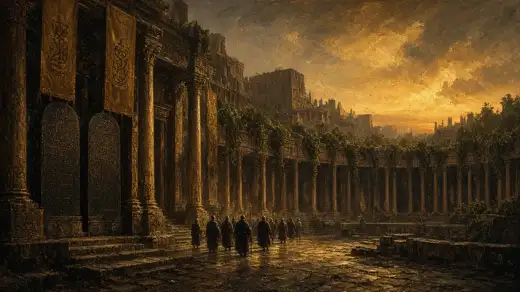
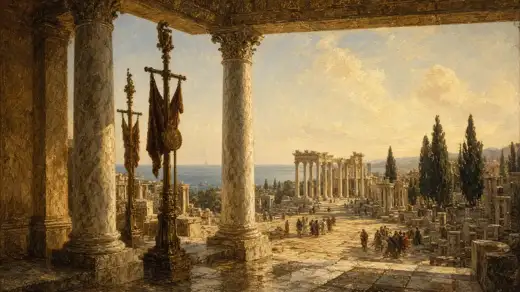
Pattern
Guns–Germs–Style (GGS) Axes and Success/Failure Mechanisms
A cross-civilizational heuristic: Guns (coercion/logistics), Germs (disease ecology), Style (legitimacy/institutions/trust). Explains why complexes scale and how they break.
Fifteen civilizations, five thousand years and one question: what lets a civilization scale — and what breaks it?

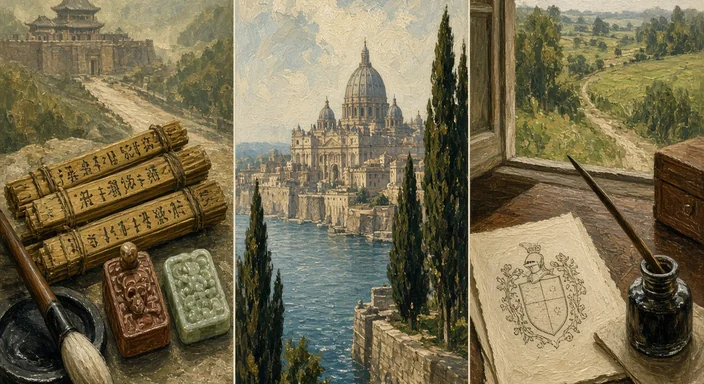
Seals and landscapes from the Patterns of Civilization chronicle.

 Andean

 Ethiopian / Axumite

 Greco-Roman

 Indus / South Asian

 Islamic

 Mesoamerican

 Mesopotamian

 Nile Valley

 Persian / Iranian

 Sinitic / East Asian

 Southeast Asian maritime

 Steppe / Central Eurasian

 Tibetan

 West African / Sahelian

 Western / Atlantic
A cross-civilizational heuristic: Guns (coercion/logistics), Germs (disease ecology), Style (legitimacy/institutions/trust). Explains why complexes scale and how they break.
Patterns of how conquering groups integrate or transform conquered regions: assimilation, syncretism, elite replacement, or civilizational transformation.
Fiscal systems (taxation, revenue, borrowing) determine state capacity and sustainability; effective fiscal systems enable military, administrative, and infrastructure capacity, while fiscal crises contribute to civilizational…
Each civilization as a place: its people, states, turning points and framework read.
Why civilizations scale and how they break, applied across all fifteen.
Four essays that sit alongside this collection.
Not yet available on the Ledger.
Cities and rulers are only part of the story. What makes a society coherent enough—and enduring enough—to be called a civilization?
Why it matters here. Starts from the question this collection tries to answer: what makes a society a civilization, beyond its famous capital.

Not yet available on the Ledger.
The Nile and the acequia reveal water as a shared responsibility, shaped by seasons, rules and the claims of neighbours.
Why it matters here. Water as a shared responsibility, a thread running through river and irrigation civilizations.

A grain account, a drain and a water channel reveal the less visible achievement of living together.
Why it matters here. The shared, less visible side of cities: grain, drains and water channels.
Not yet available on the Ledger.
Institutions can survive a change of rulers. From Qin and Han to Rome’s eastern continuation, an essay on what is carried forward.
Why it matters here. Institutions that outlive their rulers are the thread through the dossiers here.
Art: Patterns of Civilization chronicle art, made with AI: illustrations, not historical evidence. Entries are drafts preserved from civilization.study. Method and sources.
Art: Patterns of Civilization chronicle art, made with AI: illustrations, not historical evidence. Entries are drafts preserved from civilization.study. Method and sources.