
Work / Civilization / Civilizations / Western / Atlantic

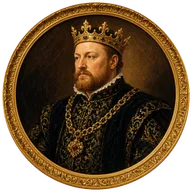

Western / Atlantic
An Atlantic-centered complex emerged from medieval European and Mediterranean roots, integrating maritime, financial, and political institutions across the North Atlantic world.
The framework read
The author's reading of this civilization.
- Geographic core: North Atlantic littorals linking Western Europe with the Americas.
- Cultural-linguistic cohesion: Latin-Christian intellectual inheritances and vernacular literacies; later Enlightenment and legal-political repertoires.
- Political-economy: maritime empires, capitalist finance, and industrialization shaping a trans-Atlantic institutional sphere.
- Continuity: recognizable civilizational identity despite national polities and colonial dynamics.
Why it works — and how it breaks
- Success vector: S (finance, law, rights institutions) + G (industrial naval/war capacity) + B (immunity advantages and Columbian Exchange dynamics; see crosby1972-columbian-exchange).
- Failure/transition modes: coalition containment; legitimacy/fiscal costs of empire; tech regime competition; periphery upshift replication by rivals.
By the numbers †
- GDPrapid growth 1.8% annual, 10% to 34% of world GDP, Great Divergence - per capita advantage over Sinitic
- Urbanization10-15% to 15-20% urban population, rapid urbanization growth, largest city: London 900K-1.0M in 1800 CE, urbanization transformation
- Fiscal Capacitytax revenue: $2.5B to $27.5B, tax-to-GDP ratio: 10% to 15%, military spending: 40% to 67% of tax revenue, fiscal-military state dynamics, fiscal innovations
- Technology Index65→92, highest globally, Great Divergence, military/industrial revolutions, innovation acceleration 8-10 to 18-22 per century
- Institutional Metrics8-12 officials per 10K, 70% tax efficiency, 2,500 legal provisions, moderate-high, state-building, educational expansion
- Demographic Structure33-35% under 15, 38-43 years life expectancy, 4-5 fertility, 28-33 mortality, beginning demographic transition, Great Divergence in health
- Infrastructure150,000-200,000 km roads, 8,000-12,000 km canals, 400 fortifications, 2,500 bridges, 83/100 sophistication index, exceptional infrastructure, expanding network, early industrial infrastructu
† Scholarly estimates.
People over time
Population (millions) †
† Scholarly estimates, drawn as separately published segments.
Economy
† Estimates after Maddison, to 1945, log scale.
Polities as spans
Each bar opens its entry.
People
- Augustine of Hippo354-430
- Averroes (Ibn Rushd)1126-1198
- Charlemagne742-814
- Marsilio Ficino1433-1499
- Galileo Galilei1564-1642
- Jesus of Nazareth4-30
- Niccolò Machiavelli1469-1527
- Isaac Newton1643-1727
Patterns and comparisons
Ideas that help read this civilization alongside others.
- Technological Regime Change and Civilizational TransitionsPattern · Major technological shifts (agricultural, military, industrial, information) can reset civilizational advantag
- Educational Systems and Elite Formation Across CivilizationsComparison · Compares educational systems (Confucian examinations, Islamic madrasas, European universities, monastic school
- Legal Systems Across CivilizationsComparison · Compares legal systems (Roman, Islamic, Chinese, common law) to identify patterns in how law structures govern
- Western/Atlantic Capitalist TransformationPattern · Western/Atlantic civilization's capitalist transformation (financial innovations, market integration, industri
- Siege WarfareConcept · Assault, blockade and defence of fortified places; central to ancient, medieval and early-modern war and to st
- Battle Deaths Versus Total War MortalityPattern · Datasets that count only battle deaths undercount war mortality; the gap is largest for civil wars and early-m
- Epistemological Traditions Across CivilizationsComparison · Compares epistemological traditions (how civilizations structure knowledge, truth, and evidence) to identify p
Explore this civilization
Polities
- Anglo-Saxon Kingdoms
- Caliphate of Córdoba [caliphate-of-cordoba]
- Caliphate of Córdoba [cordoba-caliphate]
- Carolingian Empire
- Duchy of Burgundy
- Duchy of Normandy
- East Francia
- First Bulgarian Empire
- Frankish Kingdom
- Hanseatic League
- Holy Roman Empire
- Kalmar Union
- Kingdom of Albania
- Kingdom of Aragon
- Kingdom of Bavaria
- Kingdom of Belgium
- Kingdom of Bohemia
- Kingdom of Bosnia
- Kingdom of Bulgaria
- Kingdom of Burgundy
- Kingdom of Castile
- Kingdom of Croatia
- Kingdom of Denmark
- Kingdom of England
- Kingdom of Estonia
- Kingdom of Finland
- Kingdom of France
- Kingdom of Greece
- Kingdom of Hanover
- Kingdom of Hungary
- Kingdom of Iceland
- Kingdom of Ireland
- Kingdom of Italy
- Kingdom of Latvia
- Kingdom of León
- Kingdom of Lithuania
- Kingdom of Lombardy
- Kingdom of Montenegro
- Kingdom of Navarre
- Kingdom of Normandy
- Kingdom of Norway
- Kingdom of Poland
- Kingdom of Portugal
- Kingdom of Prussia
- Kingdom of Romania
- Kingdom of Russia
- Kingdom of Sardinia
- Kingdom of Saxony
- Kingdom of Scotland
- Kingdom of Serbia
- Kingdom of Spain
- Kingdom of Sweden
- Kingdom of Wales
- Kingdom of Württemberg
- Kingdom of the Netherlands
- Milan
- Modern France
- Modern Germany
- Modern United Kingdom
- Novgorod Republic
- Papal States
- Pisa
- Polish-Lithuanian Commonwealth
- Pskov Republic
- Republic of Florence
- Republic of Genoa
- Republic of Venice
- Russian Federation
- Second Bulgarian Empire
- Siena
- Swiss Confederacy [kingdom-of-switzerland]
- Swiss Confederacy [swiss-confederacy]
- Umayyad Emirate of Córdoba
- Union of Soviet Socialist Republics (USSR)
- United States of America
- West Francia
Data cards
- United States GDP Data 1945-present CE ("American Period")
- Western/Atlantic Civilization Fiscal Data 1500-1800 CE
- Western/Atlantic Civilization GDP Data 1500-1800 CE
- Western/Atlantic Civilization GDP Data 1800-1945 CE
- Western/Atlantic Civilization GDP Data 1945-present CE ("American Period")
- Western/Atlantic Civilization Military Data 1800-1945 CE
- Western/Atlantic Civilization Military Data 1945-present CE ("American Period")
- Western/Atlantic Civilization Military Size Data 1500-1800 CE
- Western/Atlantic Civilization Population Data 1800-1945 CE
- Western/Atlantic Civilization Population Data 1945-present CE ("American Period")
- Western/Atlantic Civilization Technology Index 1800-1945 CE
- Western/Atlantic Civilization Technology Index 1945-present CE ("American Period")
- Western/Atlantic Demographic Structure 1500-1800 CE
- Western/Atlantic Demographic Structure Data 1945-present CE
- Western/Atlantic Fiscal Capacity Data 1945-present CE
- Western/Atlantic Infrastructure Data 1500-1800 CE
- Western/Atlantic Infrastructure Data 1945-present CE
- Western/Atlantic Institutional Metrics 1500-1800 CE
- Western/Atlantic Institutional Metrics Data 1945-present CE
- Western/Atlantic Technology Index 1500-1800 CE
- Western/Atlantic Trade Volume Data 1945-present CE
- Western/Atlantic Urbanization Data 1500-1800 CE
- Western/Atlantic Urbanization Data 1945-present CE
Concepts
- Analytic Philosophy and the Western/Atlantic Intellectual Core
- Arabic–Latin Philosophical Transmission (Avicenna to Scholasticism)
- Augustinianism (Christian Neoplatonic Legacy)
- Avicenna (Ibn Sina) and Latin Reception
- Cartesian Mind–Body Dualism and Scientific Institutions
- Credit Systems and Financial Innovation
- Epistemology Systems and Knowledge Structures
- Ethics Systems and Moral Frameworks
- Ficino and Renaissance Neoplatonism
- Frontier Myth and Trait Selection
- Galileo Affair (Epistemic–Institutional Conflict)
- Innovation, Openness, and Control
- Latin Averroism (Averroes in the Latin West)
- Lingua Francas and Administrative Languages
- Lockean Natural Rights and Atlantic Political Order
- Logical Positivism (Vienna–Berlin to Atlantic)
- Monetary Iconography and Currency Symbols
- Neoplatonism and Christian Thought
- Radius of Trust
- Scholasticism as Medieval Intellectual-Institutional Method
- Translation Systems and Cross-Linguistic Transmission
Patterns
People
Events
- Black Death (1347 CE)
- Charlemagne Crowned Holy Roman Emperor (800 CE)
- Cold War (1945-1991 CE)
- Columbus Reaches Americas (1492 CE)
- Copernicus Publishes "On the Revolutions" (1543 CE)
- French Revolution (1789 CE)
- German Unification (1871 CE)
- Globalization Acceleration (1990s CE)
- Industrial Revolution Begins (1760 CE)
- Newton Publishes "Principia" (1687 CE)
- Nuclear Weapons (1945 CE)
- Russian Revolution (1917 CE)
- Soviet Union Dissolution (1991 CE)
- Spanish Conquest of Tenochtitlan (1521 CE)
- United States Independence (1776 CE)
- World War I (1914-1918 CE)
- World War II (1939-1945 CE)
Comparisons
- Educational Systems and Elite Formation Across Civilizations
- Epistemological Traditions Across Civilizations
- Indic Metaphysics in Western Thought (via Schopenhauer)
- Legal Systems Across Civilizations
- Lingua Francas Across Civilizations
- Moral Philosophy Across Civilizations
- Philosophical Influence Bridges Across Civilizations
- Translation Traditions Across Civilizations
- World Ledger — GGS Mappings by Civilization
Conflicts in this civilization
Each conflict opens on its polity page. Evidence badges show how well each is sourced; stub-only conflicts carry no figures.
- 3 February 1509 Battle of Diu (1509 CE) naval battle Primary text read
- 15 August 1511 (21 Jumada I 917 AH) Capture of Malacca (1511 CE) siege Primary text read
- February 1519-13 August 1521 Spanish Conquest of the Aztec Empire (1519-1521 CE) conquest Primary text read
- 7 July 1520 Battle of Otumba (1520 CE) battle Primary text read
- 30 June-1 July 1520 La Noche Triste (1520 CE) battle Primary text read
- 16 November 1532 Battle of Cajamarca (1532 CE) battle Primary text read
- 1532 CE-1572 CE Spanish Conquest of the Inca Empire (1532-1572 CE) conquest Primary text read
- 7 October 1571 Battle of Lepanto (1571 CE) naval battle Stub only
- 23 May 1618-24 October 1648 Thirty Years' War (1618-1648 CE) interstate war Primary text read
- Siege 14 July-11 September 1683; battle 12 September 1683 Siege and Battle of Vienna (1683 CE) siege Primary text read
- 1803 CE-1815 CE Napoleonic Wars (1803-1815 CE) war series Formal source, metadata only
- 21 October 1805 Battle of Trafalgar (1805 CE) naval battle Primary text read
- 4 September 1839-29 August 1842 First Opium War (1839-1842 CE) interstate war Primary text read
Art: Patterns of Civilization chronicle art, made with AI: illustrations, not historical evidence. Entries are drafts preserved from civilization.study. Method and sources.